
Dekker Vacuum Systems
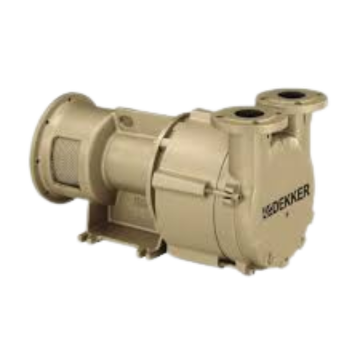
Titan Liquid Ring Vacuum Pumps & Compressors
The Titan series features a variable discharge port design, this port automatically adjusts to the internal compression ratio. It offers maximum efficiency with a single stage design. The vacuum pump registers levels up to 29" HgV. These pumps offer high volumetric efficiency with 50% less seal liquid requirement.

Duravane Rotary Vane Vacuum Pumps & Low-Pressure Air Compressors
DuraVane brand lubricated rotary vane vacuum systems: single-stage pumps with an integrated oil recirculation system.
Duravane line of vacuum pumps and air compressors are well designed, reliable, and economical. They feature a compact design and a small foot print, low noise levels, and low maintenance. These can also feature an integrated high efficiency multi-stage exhaust filter.
HullVac Rotary Piston Vacuum Pumps
HullVac Rotary Piston Vacuum Pumps are engineered for long life. With great performance and low maintenance, and ease of use these pumps are built for the toughest industrial environment. The HullVac line is affordable and can save money on energy costs with their efficient design.


Maxima-C Large Capacity Vacuum Pumps
The Maxima-C line of large capacity vacuum pumps features canonical porting instead of a flat plate design allowing it to handle more seal liquid or liquid carryover. The Maxima-C is a heavy duty design with a 20 blade shrouded rotor and multiple inlet/discharge configurations. This design offers maximum efficiency, low noise, low maintenance, and offers unparalleled reliability.
Contact Us For A Quote Or Service
Dekker Vacuum Systems FAQ
Which Dekker vacuum systems are featured?
Our page highlights Titan liquid ring equipment, DuraVane rotary vane systems, HullVac rotary piston pumps, and Maxima-C large-capacity vacuum pumps. Compare each design against the pressure, flow, and process conditions required.
What does a liquid ring vacuum pump do?
An impeller rotates within a casing containing seal liquid. The resulting liquid ring forms changing gas pockets that draw gas into the pump and discharge it at a higher pressure.
What is the role of seal liquid?
Seal liquid helps form the pumping chambers and carries away heat. Its temperature, composition, and circulation affect performance, so seal liquid conditions are part of the system design and operating checks.
How does a rotary vane vacuum pump work?
A rotor with sliding vanes creates chambers that expand and contract as it turns. In an oil-sealed design, lubricant supports sealing and operation, and the exhaust arrangement manages oil carried out with the gas.
When should I consider a liquid ring system?
Consider it for a process whose gas or vapor load suits liquid ring technology. Review seal liquid compatibility, operating temperature, utilities, and exhaust treatment before deciding whether it is the right solution.
Can a liquid ring pump tolerate liquid carryover?
Some liquid ring configurations accommodate wet service, but allowable liquid load is limited by the design. Describe normal carryover and possible upset conditions so inlet separation and protective measures can be evaluated.
Why does seal liquid temperature affect vacuum?
The seal liquid's vapor pressure changes with temperature and influences the achievable vacuum. Excess heat can reduce useful capacity, making adequate cooling and consistent liquid supply important to system performance.
Can seal liquid be recirculated?
Recirculation may be part of the system design. It requires consideration of heat removal, contamination buildup, liquid level, and makeup needs, so the arrangement should be selected for the actual process.
How do I size a Dekker vacuum system?
Specify the required absolute pressure and gas flow at operating conditions. Include evacuation time, vapor load, temperature, operating schedule, and utilities so selection covers both normal duty and anticipated changes.
What is the difference between vacuum flow and vacuum level?
Vacuum level describes pressure, while flow describes the amount of gas the system must remove. A pump must supply adequate capacity at the required pressure; either specification alone is insufficient.
What maintenance does a Dekker vacuum system need?
Follow the model-specific manual. Depending on the design, service may involve lubricant, filters, seal liquid, cooling equipment, belts or couplings, and checks for leaks, abnormal temperatures, and changes in operating performance.
Why is my vacuum pump losing performance?
Leaks, inlet restrictions, excessive gas load, poor seal liquid conditions, or internal wear can reduce performance. Compare pressure and temperature readings with the original duty before selecting corrective work.
How should exhaust from a vacuum system be handled?
Review the gas composition, temperature, moisture, and possible lubricant carryover. Exhaust piping and any separation or treatment equipment must suit those conditions without creating excessive backpressure at the pump.
Can an existing vacuum system be expanded?
Possibly. Check available pump capacity, piping losses, controls, cooling, and utilities against the additional demand. Adding another user can change performance throughout a shared network, especially during simultaneous operation.
What should I provide when requesting service or replacement?
Send nameplate information, operating vacuum, process details, recent symptoms, and maintenance history. Photos of the pump, piping, and supporting equipment help explain the installation and identify relevant system constraints.
Where can I get Dekker vacuum assistance in Tennessee?
Call Industrial Air Services at (615) 641-3100 to discuss your vacuum system. Have the model and application details available so our team can review equipment selection, service needs, or replacement options.