
Liberty Process Pumps
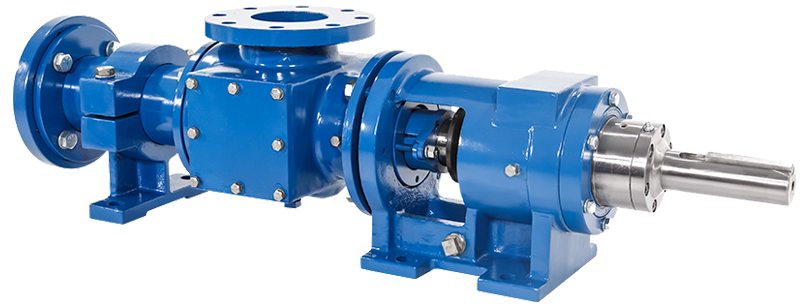
At Industrial Air Services, we proudly supply Liberty Process Pumps, a U.S. manufacturer specializing in economical and reliable progressive cavity pump solutions. Liberty is known for offering high-quality OEM replacement pumps and parts, as well as complete pump packages, all engineered for demanding industrial, municipal, and commercial applications.
Product Highlights
Progressive Cavity Pumps – Efficient designs for handling viscous, abrasive, and shear-sensitive fluids.
OEM Replacement Pumps & Parts – Drop-in replacements compatible with major progressive cavity pump brands.
Complete Pump Packages – Engineered skid-mounted systems designed for plug-and-play installation.
Metering & Dosing Pumps – Precision solutions for chemical injection and process dosing.
Custom Engineered Solutions – Tailored systems built to meet specific industrial requirements.
Why Choose Liberty?
Cost-effective alternatives to OEM progressive cavity pumps and parts
American-made designs built for durability and reliability
Strong focus on serviceability, interchangeability, and quick turnaround
Industrial Air Services
📞 (615) 641-3100
📍 138 Bain Drive • LaVergne, TN 37086
Contact Us
Liberty Process Progressive Cavity Pumps FAQ
What are Liberty Process pumps used for?
Liberty Process specializes in progressive cavity pumping for viscous liquids, sludge, slurries, and other difficult materials. Applications include wastewater, chemical processing, food production, and industrial transfer.
How does a progressive cavity pump work?
A helical rotor turns within a matching stator, forming cavities that move liquid from inlet to discharge. The progressing cavities provide positive displacement flow through the pump.
Why use a progressive cavity pump for thick liquids?
The cavity geometry can move viscous material without relying on high impeller speed. Inlet feeding, product viscosity, and motor torque still determine achievable performance.
Can Liberty Process pumps handle sludge?
Suitable progressive cavity pumps can transfer sludge and solids-containing mixtures. Solids concentration, particle size, abrasiveness, and available suction conditions must be included in selection.
Can these pumps handle shear-sensitive products?
Progressive cavity action can provide relatively gentle transfer at appropriate speeds. Product testing may be needed where texture, particle integrity, or viscosity changes are critical.
Are progressive cavity pumps suitable for metering?
Their displacement per revolution can support controlled feed when properly selected. Actual accuracy depends on speed control, internal slip, wear, pressure, and calibration.
How does pump speed affect output?
Flow generally increases with speed within the operating limits. Excessive speed can worsen wear or inlet filling, especially with abrasive or highly viscous materials.
What does the stator do?
The stator forms the stationary internal geometry around the rotor. Its fit and material affect sealing, performance, chemical compatibility, and resistance to operating temperature.
How is stator material selected?
Evaluate the process chemical, concentration, temperature, cleaning agents, and abrasive content. An elastomer that handles one fluid may swell, harden, or deteriorate in another.
Can a progressive cavity pump run dry?
Many designs depend on liquid to lubricate and cool rotor-stator contact. Dry operation can damage the stator quickly, so follow the manual and consider suitable dry-run protection.
Why is discharge pressure protection important?
A positive displacement pump can continue building pressure against a restriction. Provide appropriate pressure protection and controls based on the pump, piping, and process requirements.
How do I size a Liberty Process pump?
Provide flow, pressure, viscosity, temperature, solids details, and suction conditions. Also identify whether the product requires hopper feeding or other assistance entering the pump.
Does Liberty Process supply replacement parts?
Liberty Process offers progressive cavity pumps and replacement parts. Confirm exact part compatibility, dimensions, materials, and operating requirements rather than assuming all similar-looking components interchange.
What maintenance should be planned?
Inspect the rotor, stator, seals, joints, and drive components as applicable. Monitor flow at a known speed and pressure to identify wear and declining efficiency.
Should a worn pump be repaired or replaced?
Compare rotor-stator wear, drive condition, repair scope, and current process needs. A replacement may be preferable when the original configuration no longer suits the material.
Where can I request Liberty Process assistance in Tennessee?
Call Industrial Air Services at (615) 641-3100 with fluid properties, required flow and pressure, and existing equipment details to discuss selection or replacement requirements.