
Poly Processing Storage Tanks
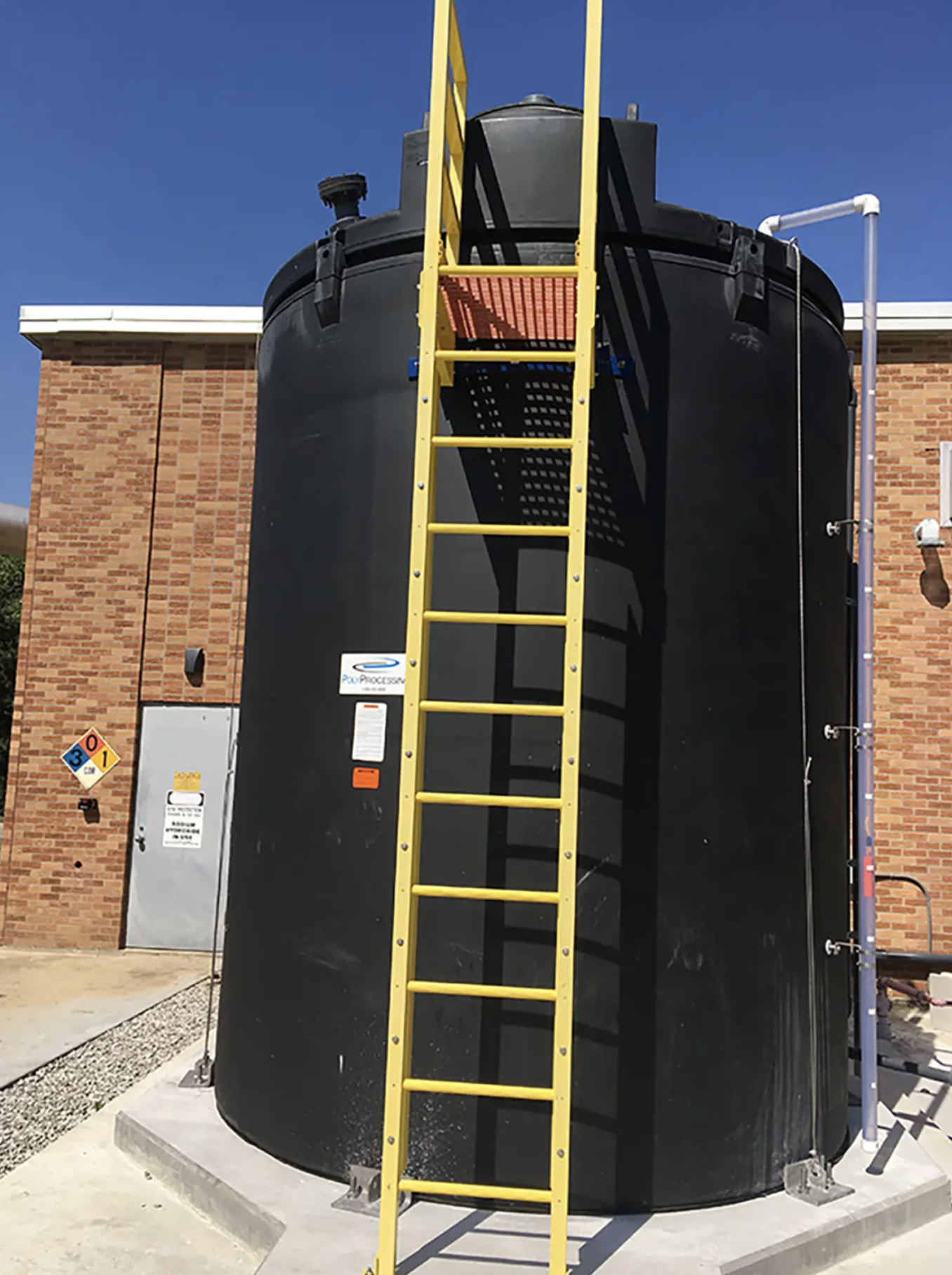
At Industrial Air Services, we proudly supply Poly Processing, an industry leader in innovative chemical storage tank systems. With over 50 years of expertise, Poly Processing specializes in engineering tanks that provide safe, reliable containment for corrosive, hazardous, and high-purity chemicals. Their systems are trusted in industries such as water treatment, chemical processing, food & beverage, power generation, and agriculture.
Product Highlights
Crosslinked Polyethylene (XLPE) Tanks – Stronger, more durable than standard polyethylene tanks for long service life.
SAFE-Tanks® Double-Wall Systems – Built-in secondary containment to protect against leaks and spills.
Cone-Bottom Tanks – Designed for complete drainage of viscous or settling chemicals.
Vertical & Horizontal Storage Tanks – Configurable solutions for a wide variety of applications.
Custom-Engineered Systems – Tailored tank and containment packages built to meet specific application needs.
Why Choose Poly Processing?
Over five decades of expertise in chemical storage and safety
Superior materials that extend tank life and improve reliability
Innovative designs that minimize risk and protect the environment
Industrial Air Services
📞 (615) 641-3100
📍 138 Bain Drive • LaVergne, TN 37086
Contact Us
Poly Processing Chemical Storage Tanks FAQ
What are Poly Processing tanks used for?
Poly Processing tanks store compatible industrial chemicals in water treatment, manufacturing, and other process applications. Selection includes the chemical, storage conditions, capacity, and complete containment arrangement.
What tank designs does Poly Processing offer?
The range includes vertical, horizontal, cone-bottom, double-wall, and secondary-containment options. Available accessories and configurations should be reviewed against the chemical and installation requirements.
What is cross-linked polyethylene?
Cross-linking joins polymer chains into a network that changes the material's properties. For chemical storage, use the manufacturer's resin and tank recommendations for the specific application.
What is the SAFE-Tank system?
SAFE-Tank is Poly Processing's double-wall tank system, combining primary storage with surrounding containment. Confirm capacity, monitoring, fittings, and installation requirements for the selected model.
Why is secondary containment important?
Secondary containment provides a place for escaped liquid if primary storage leaks. Its design must account for the chemical, stored volume, site arrangement, and applicable project requirements.
How do I determine the required tank capacity?
Consider delivery size, normal consumption, reserve needs, and operating levels. Leave the manufacturer's required free space and account for minimum usable volume and any mixing or temperature effects.
Why does chemical concentration matter?
Different concentrations can change compatibility, density, and vapor behavior. Specify the actual concentration and expected variations rather than requesting a tank based only on the chemical's name.
Why does specific gravity affect tank selection?
Denser liquids place greater loads on the tank wall and base. The tank's rating must suit the liquid at the operating temperature, not merely the nominal storage volume.
Can one tank material store every chemical?
No. Tank resin, fittings, gaskets, and accessories must all be compatible. Review any intended chemical change before reusing a tank for a different product.
What is an IMFO fitting?
Poly Processing's Integrally Molded Flanged Outlet is an outlet design incorporated into selected tanks. Review the chosen configuration for drainage, piping connection, and support requirements.
Why does a chemical tank need proper venting?
Filling and emptying displace gas, while some chemicals release vapors. Venting must address the actual rates and chemistry; an atmospheric tank should not be treated as a pressure vessel.
Can Poly Processing tanks be installed outdoors?
Outdoor suitability depends on the selected tank, chemical, temperature, and site conditions. Evaluate sun exposure, wind, freezing, foundation support, and any required restraint or protection.
What foundation does a storage tank require?
Use a foundation and support arrangement meeting the manufacturer's requirements for that tank geometry. Uneven support or concentrated loads can compromise the installation despite correct chemical compatibility.
How should connected piping be supported?
Piping must accommodate tank movement and avoid imposing excessive loads on fittings. Follow manufacturer guidance for independent supports and flexible connections appropriate to the chemical and installation.
What inspections should be scheduled?
Inspect tank surfaces, fittings, supports, containment, and monitoring devices according to the manufacturer's guidance. Track changes in condition and service history rather than assuming a fixed lifetime for every application.
Where can I request Poly Processing tank assistance in Tennessee?
Call Industrial Air Services at (615) 641-3100 with chemical name, concentration, temperature, capacity, location, and connection requirements to discuss the appropriate tank package.