
Hydro-Thrift Booster Systems
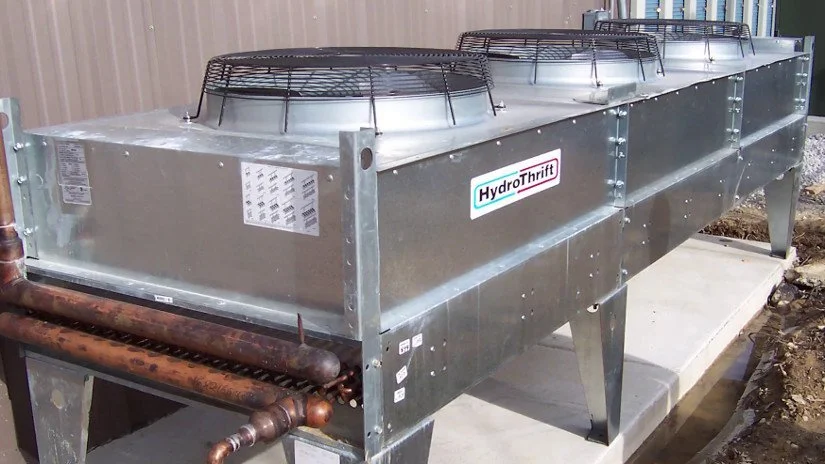
At Industrial Air Services, we proudly offer HydroThrift, a U.S.-based manufacturer specializing in industrial cooling systems and heat transfer solutions. With over 50 years of engineering expertise, HydroThrift designs and builds systems that provide reliable temperature control for industrial processes, power generation, chemical plants, and more. Their products are known for durability, efficiency, and custom engineering tailored to demanding applications.
Product Highlights
Closed-Loop Cooling Systems – Complete skid-mounted systems designed for continuous duty operation.
Air-Cooled Heat Exchangers – Low-maintenance, energy-efficient solutions for industrial cooling.
Water-Cooled Heat Exchangers – Reliable heat transfer for high-performance process and power applications.
Pump & Control Packages – Integrated systems for simplified installation and operation.
Custom-Engineered Solutions – Purpose-built cooling and heat transfer systems for unique industrial needs.
Why Choose HydroThrift?
Over five decades of experience in industrial cooling and heat transfer
Rugged, American-made designs built for long service life
Flexible, custom systems engineered to meet specific process requirements
Industrial Air Services
📞 (615) 641-3100
📍 138 Bain Drive • LaVergne, TN 37086
Contact Us
Hydro-Thrift Industrial Cooling Systems FAQ
What are Hydro-Thrift systems used for?
HydroThrift designs industrial cooling and heat-transfer systems that remove heat from equipment and processes. Applications require matching cooling capacity and temperature control to the actual heat load.
What is a closed-loop cooling system?
A closed-loop system recirculates a controlled coolant through equipment and a heat-rejection arrangement. It separates the process loop from direct exposure to an open cooling-water source.
What cooling technologies does HydroThrift offer?
HydroThrift lists dry, evaporative, liquid-to-liquid, and chilled-water systems, among other thermal solutions. The suitable method depends on temperatures, ambient conditions, water availability, and process requirements.
How does dry cooling work?
A dry cooler transfers heat from circulating liquid to ambient air through a heat exchanger. Its achievable liquid temperature depends strongly on outdoor air temperature and exchanger sizing.
How does evaporative cooling differ?
Evaporative cooling uses water evaporation to reject heat. It has different temperature potential, water-use requirements, and maintenance needs than a dry air-cooled arrangement.
What is liquid-to-liquid cooling?
A heat exchanger transfers heat from the process coolant to a separate cooling liquid. The two circuits remain separate, allowing different water-quality and operating requirements on each side.
When is chilled-water cooling needed?
Chilled water may be necessary when the required process temperature cannot be maintained using available air or cooling water. Selection depends on the lowest required supply temperature and heat load.
What is heat load?
Heat load is the rate of thermal energy the cooling system must remove. It should reflect actual operating equipment and peak conditions rather than pump horsepower alone.
What information is needed to size a cooling system?
Provide heat load, coolant flow, supply and return temperatures, fluid composition, pressure limits, and ambient design conditions. Include utilities, operating schedule, and planned expansion.
Why does summer ambient temperature matter?
A system sized for mild weather may lack capacity during hot conditions. Dry and evaporative designs must be evaluated using the relevant local design temperatures.
Can glycol be used in a cooling loop?
A compatible glycol mixture may provide freeze protection, but it changes viscosity, heat capacity, and pumping requirements. Use the specified fluid and concentration in the design calculations.
Can closed-loop cooling reduce water consumption?
Recirculating process coolant can reduce reliance on once-through water. Overall water use still depends on heat-rejection technology, makeup requirements, and the complete installation.
Can cooling systems include pumps and controls?
HydroThrift supplies engineered systems with integrated equipment as specified. Confirm pump duty, tank arrangements, temperature controls, alarms, and instrumentation included in the proposed package.
What maintenance does industrial cooling equipment need?
Inspect heat-transfer surfaces, coolant condition, pumps, fans, sensors, and controls as applicable. Fouling or reduced airflow can limit cooling even when the pump continues running.
Can an existing cooling system be upgraded?
An upgrade may involve heat-rejection capacity, circulation, controls, or fluid management. Assess current heat load and the cause of temperature problems before adding equipment.
Where can I request Hydro-Thrift cooling assistance in Tennessee?
Call Industrial Air Services at (615) 641-3100 with heat load, temperatures, coolant details, utilities, and installation constraints to discuss a suitable industrial cooling solution.