
Thermal Products Heating Systems
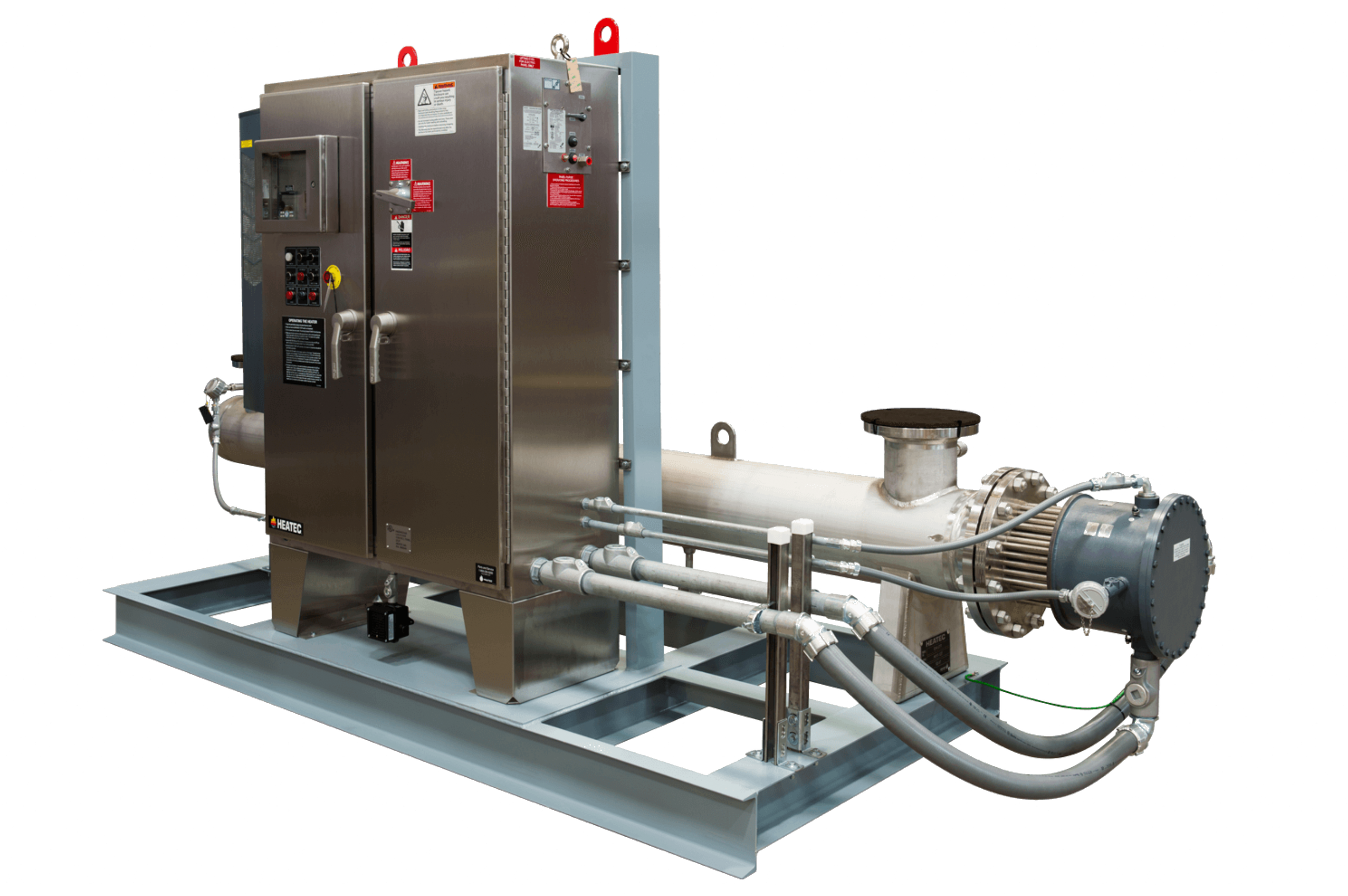
At Industrial Air Services, we proudly partner with Thermal Products, Inc., a leading distributor and manufacturer’s representative specializing in heat transfer and process equipment. Since 1969, Thermal Products has provided high-quality solutions for industrial heating, cooling, and fluid handling applications across multiple industries including power generation, chemical processing, food & beverage, and manufacturing.
Product Highlights
Heat Exchangers – Shell & tube, plate & frame, and custom heat exchangers for industrial processes.
Process Heating Equipment – Electric heaters, thermal fluid systems, and immersion heaters.
Cooling Systems – Air-cooled and water-cooled solutions for temperature control.
Filtration & Separation – Strainers and filtration equipment to protect pumps and process systems.
Custom Engineered Systems – Turnkey heat transfer and process solutions tailored to customer specifications.
Why Choose Thermal Products?
Over 50 years of expertise in heat transfer and process equipment
Broad product portfolio serving diverse industrial markets
Custom-engineered solutions backed by strong technical support
Industrial Air Services
📞 (615) 641-3100
📍 138 Bain Drive • LaVergne, TN 37086
Contact Us
Thermal Products Heat Transfer Equipment FAQ
What does the Thermal Products page cover?
Industrial Air Services' Thermal Products offering covers industrial heat transfer and process equipment, including heat exchangers, heating equipment, cooling solutions, and related system components.
What is an industrial heat exchanger?
A heat exchanger transfers thermal energy between fluids, typically through a separating surface. Selection balances required heat transfer, pressure drop, material compatibility, and cleaning needs.
How do shell-and-tube and plate heat exchangers differ?
Shell-and-tube units route fluid through tubes and a surrounding shell. Plate units use channels between plates, offering different layouts, service access, and operating limits.
What is process heating equipment used for?
Process heating raises or maintains a material's temperature for production. Applications require matching heater type, heat input, control method, and fluid-contact materials to the process.
What is an immersion heater?
An immersion heater transfers heat through an element positioned in a suitable fluid. Material compatibility, allowable surface loading, liquid level, and temperature controls are important selection factors.
What is a thermal-fluid heating system?
A thermal-fluid system circulates a heat-transfer medium between a heater and process equipment. Fluid selection, operating temperature, expansion, circulation, and monitoring must be considered together.
How do air-cooled and water-cooled systems differ?
Air-cooled equipment rejects heat to surrounding air, while water-cooled equipment transfers heat to a water circuit. Available utilities and required temperatures influence the suitable arrangement.
What information is needed for heat-exchanger selection?
Provide both fluids, flow rates, inlet and outlet temperatures, operating pressures, allowable pressure drops, and fouling information. Include material requirements and available space.
Why is approach temperature important?
The temperature difference between the two streams near an exchanger's limiting point affects required surface area. A close temperature approach can demand a larger or different exchanger design.
How does fouling affect heat transfer?
Deposits add thermal resistance and may restrict flow. Equipment selection and maintenance should account for likely buildup and how the exchanger can be cleaned effectively.
Can heat-transfer equipment handle corrosive fluids?
A suitable construction may be available after reviewing chemistry, concentration, temperature, and pressure. Compatibility must include plates or tubes, gaskets, seals, and all other wetted parts.
Can filtration help protect thermal equipment?
Appropriate upstream filtration or straining can limit debris entering narrow passages. It does not remove every contaminant or replace the need to manage scaling and fluid chemistry.
Can waste heat be recovered?
Recovery may be practical when a heat source and useful heat demand are available at compatible temperatures. Evaluate operating schedules, exchanger requirements, and potential contamination barriers.
What maintenance should be planned?
Inspect heat-transfer surfaces, seals, supports, sensors, and controls as applicable. Track temperatures and pressure drop so loss of performance can be distinguished from changing process conditions.
Can existing heating or cooling equipment be replaced?
A replacement requires review of duty, ratings, materials, dimensions, and controls. Updated process data may reveal that a direct copy of the original equipment is unsuitable.
Where can I request Thermal Products assistance in Tennessee?
Call Industrial Air Services at (615) 641-3100 with fluid properties, heat duty, temperatures, pressures, and installation information to discuss appropriate heat-transfer equipment.